Punta Cana vs Aruba
Punta Cana and Aruba are both built for American beach weeks, but they sell opposite products. Punta Cana is the all-inclusive factory: giant resorts, pre-paid everything, excursion-heavy itineraries, and the cheapest per-person week in the Caribbean. Aruba is the à-la-carte island: smaller properties, 200+ independent restaurants, bone-dry weather, and a price tag to match.
Punta Cana
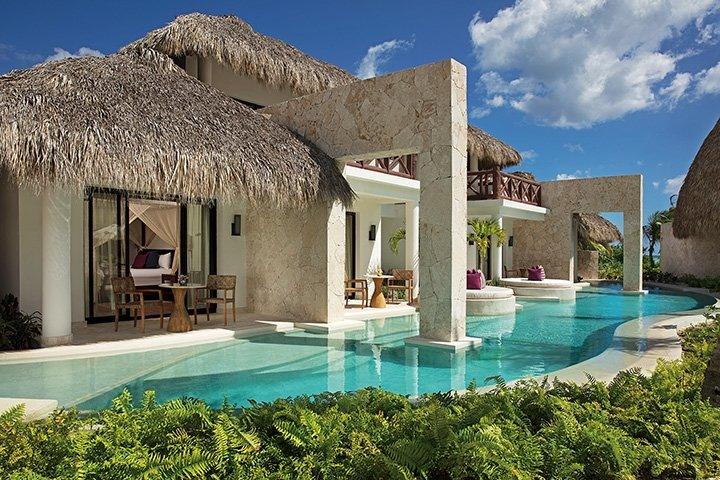
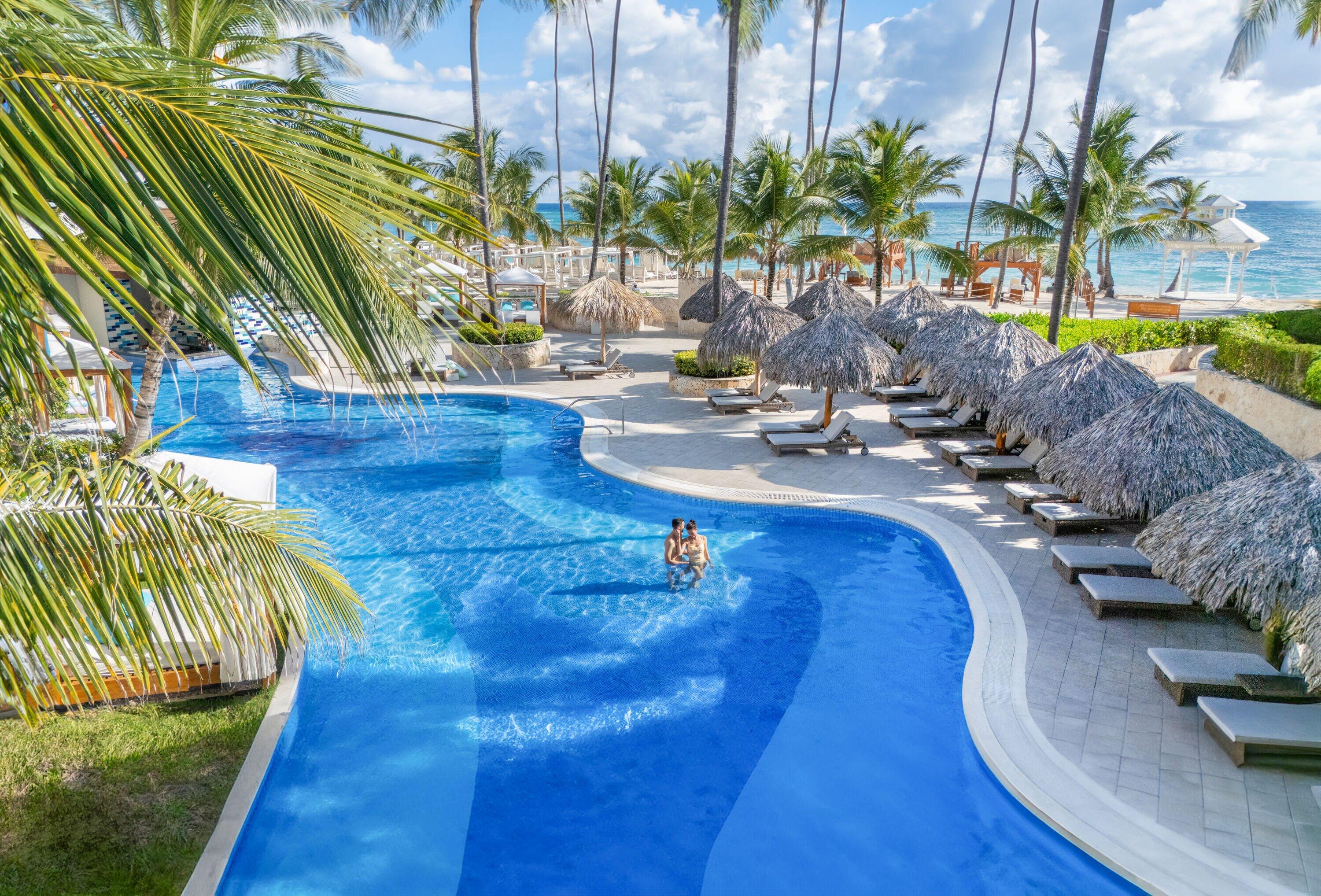
Choosing Punta Cana means locking into a single resort for the week and leaning on the all-inclusive model to flatten costs. You'll spend your mornings on wide Atlantic beaches, your afternoons at swim-up bars or excursions to Saona Island, and your evenings rotating through buffet stations. It's a high-volume operation — expect crowds, animation teams, and a rhythm dictated by the resort schedule.
Why you'll love it
- Cheapest per-person week: all-inclusive rates often run $200–$400 less per night than Aruba equivalents, and food/drink is bundled
- Massive resort infrastructure with multiple pools, entertainment schedules, and kids' clubs that actually work
- Wide, palm-lined beaches with direct access from nearly every property along Bávaro, Cap Cana, and Uvero Alto
- Excursion-heavy destination with easy day trips to Saona Island, Scape Park zip lines, buggy tours, and party boats
- Four-hour flights from the East Coast with competitive airfare and frequent charters
Worth knowing
- Seasonal sargassum from April through August can pile up on the shore and require daily cleanup
- Hurricane season May–November with peak risk in August–October; weather is less predictable than Aruba year-round
- You're stuck on-property for most meals — leaving the resort bubble requires a taxi and drops you into a limited local dining scene
- Service and cleanliness can be inconsistent across the mid-tier resorts, and language barriers pop up outside the front desk
- The all-inclusive model encourages overindulgence and makes it easy to never leave the resort, which can feel monotonous by day five
Best for: Families or groups who want predictable costs, built-in kids' programming, and a week where you don't have to think about logistics. Also the right move if budget is tight and you're willing to trade flexibility for value.
Aruba
Choosing Aruba means paying more per night but getting an actual island to explore instead of a resort compound. You'll rent a car, eat at different restaurants every night, and spend your beach time on calm, swimmable Caribbean water under guaranteed sun. The infrastructure is American-friendly — English everywhere, US pre-clearance at the airport, and a walkable hotel strip that doesn't require a guide.
Why you'll love it
- Bone-dry, reliable weather year-round with almost no hurricane risk — you can book six months out and trust the forecast
- Over 200 independent restaurants within a ten-minute drive of Palm or Eagle Beach, from Dutch-Caribbean fusion to American chains
- Calm, clear Caribbean water on the leeward side with consistent swimming conditions and minimal seaweed
- Walkable and driveable: Eagle Beach and Palm Beach are connected by a single boulevard, and the island is safe to explore by rental car
- US pre-clearance at AUA airport means you land stateside as a domestic arrival, skipping customs lines at home
Worth knowing
- Significantly more expensive: expect $300–$600+ per night at mid-tier resorts, and meals/drinks are à-la-carte unless you book one of the few all-inclusives
- Limited all-inclusive options compared to Punta Cana — most properties are room-only or breakfast-included, so you're budgeting per meal
- The island is small and the beach scene is concentrated; by day four you've seen most of what's accessible without a boat
- Wind is constant on the windward coast, which keeps temps comfortable but makes umbrellas useless and can chop up the water
- Fewer big excursions or adrenaline activities compared to the DR — Aruba leans on beach time, snorkeling, and sunset sails
Best for: Couples or small groups who want weather insurance, restaurant variety, and the freedom to move around without a tour guide. Also the right pick if you've done the all-inclusive loop before and want a Caribbean week that feels less scripted.
The verdict
If you're traveling with kids, on a tight budget, or want a week where the resort handles everything, Punta Cana wins on value and infrastructure — the all-inclusive model works best when you're feeding multiple people and don't want to track expenses. If you're a couple, prioritize weather predictability, or get bored eating at the same buffet for seven nights, Aruba is worth the premium — you're paying for flexibility, variety, and an island you can actually explore. The exception: if you've never done all-inclusive and want to try the format at its highest scale, Punta Cana's top-tier adults-only resorts like Secrets Cap Cana or Excellence deliver better service than Aruba's limited all-inclusive options. We run a full Aruba trip planner at https://www.onehappyaruba.com if you're leaning that direction and want vetted hotel picks, restaurant lists, and beach breakdowns.
Either way
- Book Punta Cana during shoulder season (late April–May or September–early November) to avoid spring break crowds and get better rates, but check sargassum reports before committing.
- In Aruba, stay on Eagle Beach if you want a quieter, low-rise vibe; Palm Beach if you want walkable nightlife and the busier resort scene.
- If you're doing Punta Cana all-inclusive, skip the cheapest tier — the gap between a 4.2 resort and a 4.6+ property is massive in service quality and food variety.
- Aruba's car rentals are cheap and driving is easy; rent for at least two days to hit Baby Beach, the natural pool, and the California Lighthouse without paying for tours.
- Both islands require sunscreen vigilance, but Aruba's wind tricks you into underestimating UV exposure — reapply every 90 minutes even if you don't feel hot.
The picks, up close